What do next-generation clients actually expect from their wealth manager?
Nearly 70% of Gen Z and Millennial investors who use a paid financial professional interact with that advisor at least once a month, according to a CFA Institute 2026 report. That figure goes higher among high-net-worth and very-high-net-worth young investors. In addition, the same research found that young investors expect regular, responsive engagement through the tools they use every day, including video calls, text messages, and messaging apps.
That requires a consistent conversational cadence, delivered through channels the client already checks daily. A document that arrives four times a year, addressed to the household, written for the person who has been reading it since 1998, serves a reader who no longer exists.
Traditional wealth management communication excludes the Gen Z and Millennial reader by design. The primary account holder set the format decades ago. The report has been refined for that reader ever since, in the same voice, at the same quarterly interval and through the same channel. The next generation of the household inherits the account and, with it, a communication style built for someone else's reading habits.
Why does the quarterly report fail that expectation?
The quarterly report was built for a reader with a specific set of habits. They set aside time to read the long document in one sitting. They usually had a working knowledge of the terminology and a relationship with the institution that predated the document itself. The report arrived on a fixed quarterly clock, regardless of what had happened in the client's life or the markets, and it was generally structured as one long document instead of something a reader could dip into.
Capgemini’s 2025 research indicates that next-generation clients want the opposite of that. The research found that younger clients want useful content delivered in short, digestible pieces instead of large reports covering interest rate movements and broad market commentary. The underlying research and analysis remain vital. The breakdown occurs in the delivery format and the assumption that one long document, sent once a quarter, can serve a next-generation reader who checks a messaging app daily for updates and expects several monthly touchpoints.
A traditional quarterly report asks the reader to trust it on the basis of tone and relationship, without showing its working. CFA Institutes’ 2026 research found that younger investors define trust through functional, measurable criteria, such as data security, demonstrated performance and credentials, instead of interpersonal rapport alone. A document that reads as institutional and relationship-led, without making the underlying evidence easy to check, is answering a question this reader is no longer asking.
What happens to firms that keep sending it anyway?
A Robert Frank article in CNBC citing Capgemini's 2025 research survey found that 81% of younger people set to inherit significant wealth plan to move away from their parents' wealth management firm. Two-thirds of the Millennials surveyed said they expect advanced digital offerings from their wealth manager, and close to half said the services available to them on their preferred digital channels fell short.
This is a commercial number, not a satisfaction score. A firm that keeps producing the same quarterly report for a client base that does not read it is quietly handing the next generation a reason to leave before it has even inherited the wealth.
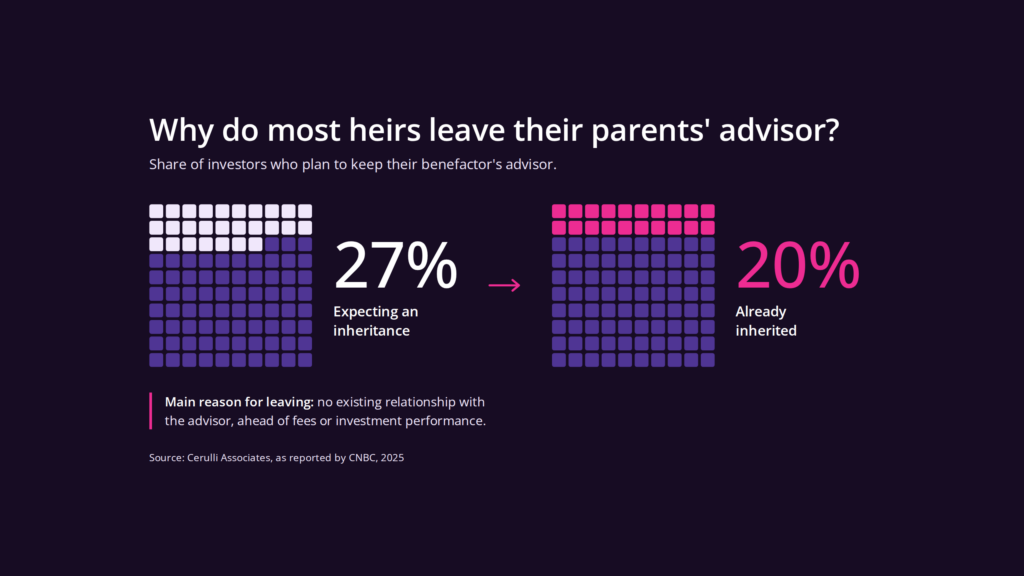
It is worth being precise about what drives that number. The quarterly report itself is not the underlying cause. Wealth transfer research shows that heirs leave primarily because an advisor relationship was never established in the first place. However, the report represents one of the few sustained touchpoints an institution maintains with a household before an inheritance event occurs. An outdated format built for a legacy reader wastes that touchpoint instead of using it to build the relationship the next generation is missing.
What should accompany the quarterly report without replacing it entirely?
The answer is not to stop producing rigorous quarterly analysis because compliance, audit trail and the primary client relationship still need it. The mistake is treating that document as the communication strategy instead of one input into it.
CFA Institute's own recommendation to advisors is to redesign communication for higher-frequency engagement. That means producing short, digestible updates, using interactive dashboards and real-time portfolio insights that match the cadence young investors already expect. All that should exist alongside the deeper document. That way the quarterly report becomes the reference material and the monthly, format-appropriate update becomes the actual relationship.
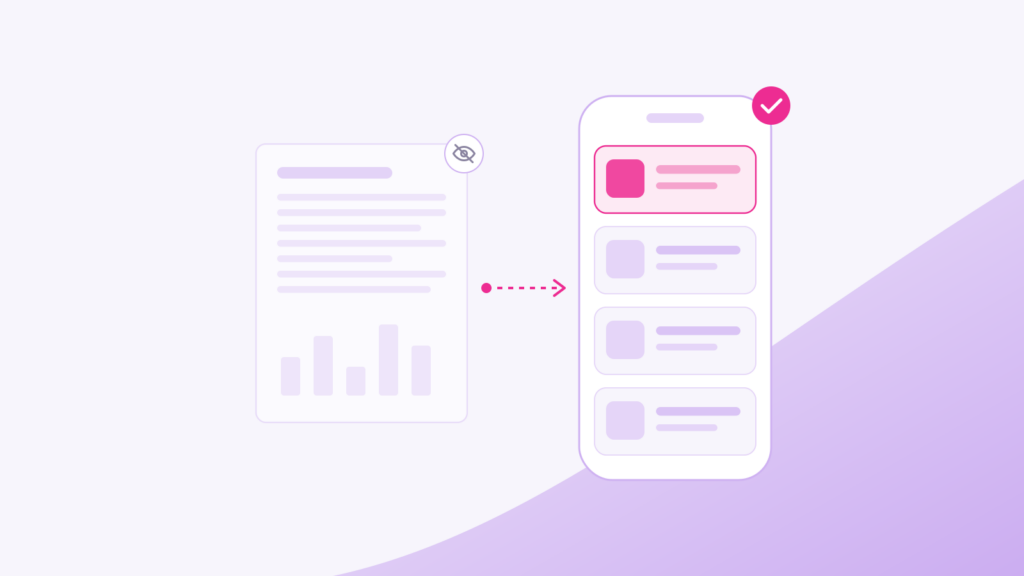
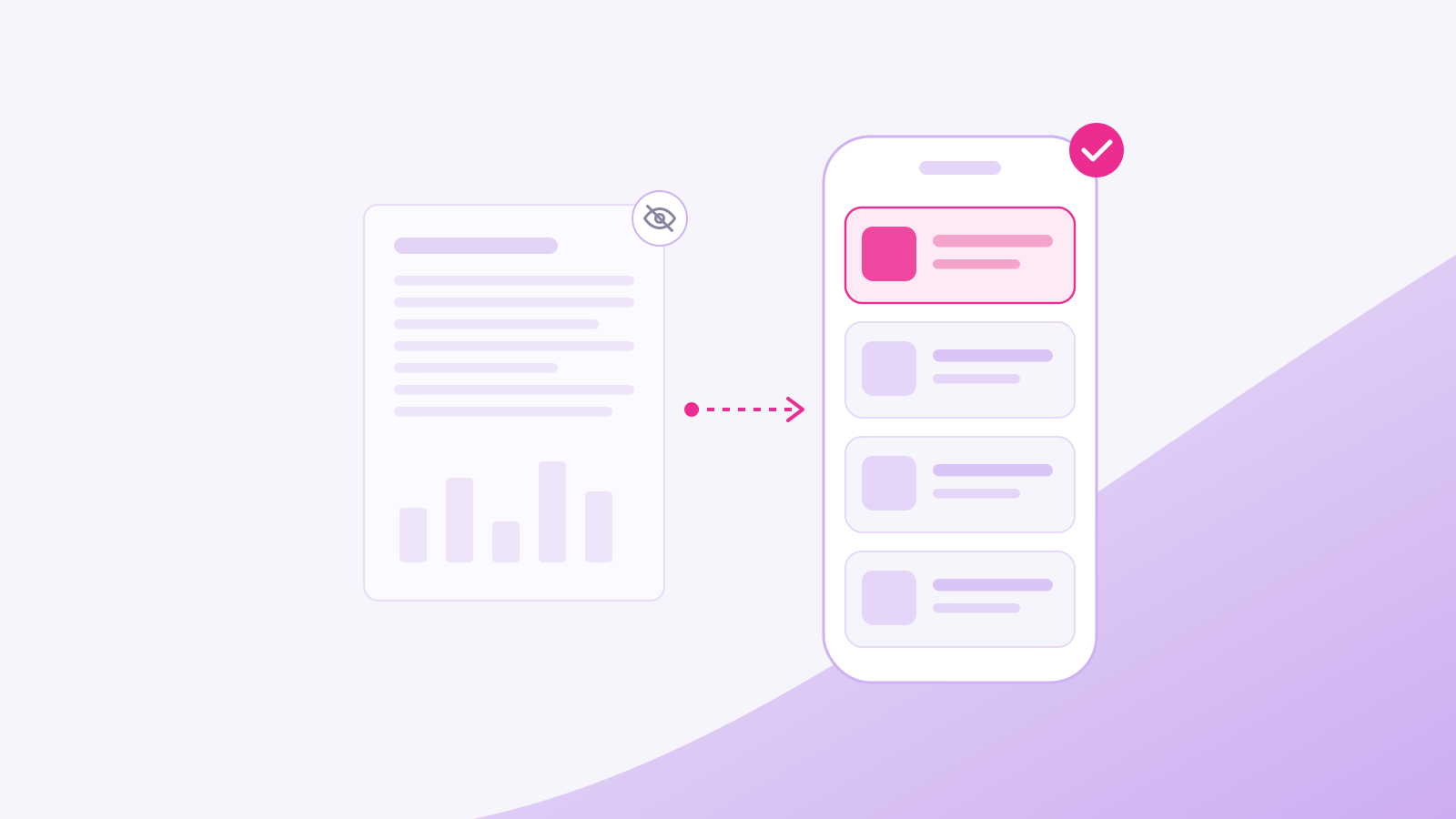
In practice, that means the same underlying research produces more than one output: the full report for the client and advisor file, along with shorter, clearer versions in formats built for a phone screen and a five-minute read, delivered on a monthly cadence. It also means tracking whether either version was opened, which current delivery models rarely permit. A firm that cannot verify if last quarter's report was read has no way of knowing whether the next generation of the relationship is already drifting.
This is the same argument that runs through the wider engagement problem in wealth management. Institutions do not lack research or insight worth sharing with clients. What they lack is a way of turning that output into formats different readers will actually engage with, at the cadence those readers expect, with a way of knowing whether it landed.
81%
of younger people set to inherit significant wealth plan to move away from their parents' wealth management firm.
Source: Capgemini, cited in CNBC, 2025.

Upscale is engagement infrastructure for modern financial institutions, built to help wealth and asset management firms turn existing research into the short, digestible formats next-generation clients expect, delivered at the cadence they check, and measured to show whether it is actually being read. The quarterly report does not need to disappear. It needs company.

Dominic Gamble
CEO and Co-founder, Upscale